Dog Training Nation

In Dogs We Trust

  • Home
  • Training
    • Dogs
    • Puppies
    • Clients
  • Behavior
    • Breeds
  • Health
  • Safety
  • Resources
    • Equipment
    • Books
  • Dog Training Videos
  • About
You are here: Home / Archives for train a dog

4 Tips for Traveling With Dogs

August 4, 2015 by Fanna Easter

Traveling With Your Dog
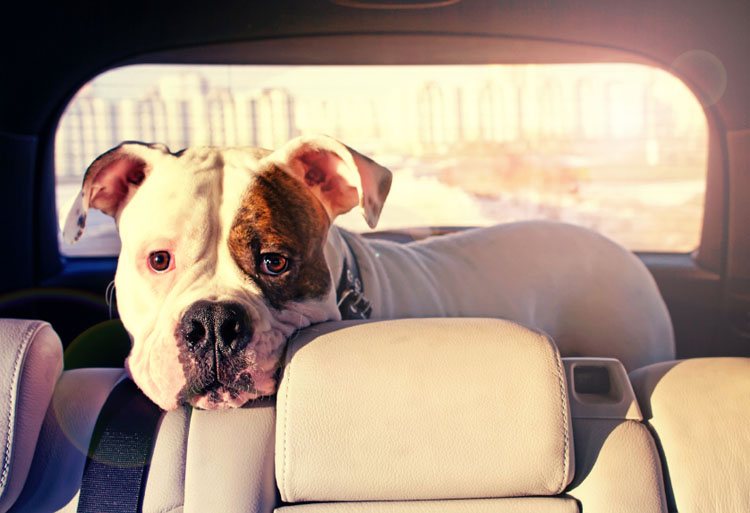
Traveling With Dogs
lilu13/iStock

While summer was fashionably late this year, she showed up scorching hot and full of humidity! Traveling during extreme temperatures can be downright dangerous, especially with dogs. Take a few minutes to prepare. Just like preparing for road trips during the winter, you’ll need some essentials before heading out for summer fun.

Must Have Air Conditioner

Yes, keep your air conditioner blowing. Dogs have a built-in fur coat and need access to cool air to prevent heat exhaustion. Even if a dog’s coat has been shaved short, he still needs access to cool air. Dogs cool themselves differently. Humans sweat when hot while dogs pant, making it a bit harder to cool during extreme heat. Never travel with your dogs in the back of a truck during summer–it’s just too hot. Hot air blowing is still hot, so keep your dog inside where he’ll be safe and cool.

Bring Frozen Goodies in a Cooler

Pack a cooler with frozen water jugs and food stuffed toys topped off with ice. As water jugs defrost, offer your dog cool water every two to three hours. Also, you can purchase Kool Koats and soak them in water to wrap around your dog during extreme heat. Better yet, place them in your dog’s crate, so he can lie on them as needed. I keep my dogs’ Kool Koats in the cooler, so they’re accessible whenever I need them.

Traveling dogs need something to do, so give them a frozen peanut butter toy to enjoy while the family cools down with ice cream cones. For best results, freeze toys overnight before traveling, so they last awhile.

RELATED: Interactive Dog Toys for Car Rides

Travel Early

Temperatures are obviously lower in the early morning, so heading out before the sun comes up will help beat the heat. Plus, your vehicle has a chance to cool completely, which is easier to maintain since heat builds throughout the day.

While traveling late in the evening is a cooler option, it seems to be much cooler during early morning hours. Although traveling at 9 pm is much cooler than noon! When possible, plan to travel during cooler temperatures.

If Stuck in Traffic

It happens and it’s so frustrating, especially when it’s 103 degrees outside. It’s like your vehicle’s air conditioner just can’t keep up. Everyone becomes really grouchy and your dog starts to pant–take quick action. Give your dog cool water and a frozen toy. It probably won’t hurt to toss his Kool Koat in his crate, so he can lie on it to cool himself down. Worse case scenario when it becomes really hot, pour cool water from the cooler over your dog’s body until traffic gets moving again.

Stay cool this summer!

Filed Under: Clients, Safety, Training Tagged With: best dog travel tips, dog training, Dog Training Tips, how to teach a dog, how to train a dog, road trips with dogs, summer road trips with dogs, summer travel tips dogs, summer travel tips puppy, summer travel with pets, teach a dog, train a dog, traveling with dogs hot, traveling with dogs summer

Dog Breed of the Week: Labrador Retriever

July 29, 2015 by Fanna Easter

Meet the Labrador Retriever

Labrador Retriever
CaptureLight/Deposit Photos

Labrador Retrievers, also known as Labs, are ranked the most popular breed in the Sporting Group of the American Kennel Club. These dogs are very active, loving and enthusiastic, which is why many people choose to add them to their families. If this dog breed is on your wish list, then hopefully this article will give you some more insight into owning one of these wonderful dogs!

General Characteristics and Temperament

Labs are predominately a solid color with three variations, including yellow, chocolate and black. Yellow Labs can vary in hue from dark apricot (deep reddish yellow) to light gold–almost appearing white. Due to variations, white Labs are extremely uncommon. They’re basically a very light yellow Lab, so be wary of breeders toting rare white Labs at a higher price, as there’s really no such thing.

WATCH: How to Find a Good Dog Breeder

The Labrador Retriever is of medium size with an athletic body. They were bred for retrieving waterfowl and running for long periods of time. Their temperaments are well-balanced and sound, so they can endure loud sounds and rough environments.

Personally, I think they make wonderful family dogs for families that are active. They’re kind, gentle and suitable as a companion. In addition to being a working dog, they have a ton of energy.

Nutrition and Health

Labrador Retrievers tend to be healthy dogs with only a few health concerns, including hip and elbow dysplasia, eye disease and exercise-induced collapse. You can minimize the likelihood of your Lab encountering health issues by finding a responsible breeder who performs health testing before breeding dogs. Also, it’s very important to obtain a trusted veterinarian who sees your new family member for regular check-ups and vaccinations.

With any dog, it’s important to feed a well-balanced diet best suited for a dog’s specific needs. Most premium dry dog foods provide different blends that meet different dogs’ needs. They make dog food specific for puppies, large breeds, active dogs and senior dogs. Before choosing a food, speak with your veterinarian about your dog’s nutritional needs.

Labrador Retriever Grooming Needs

All Labs–yellow, black and chocolate–have a dense weather-resistant coat that enables them to retrieve waterfowl without being affected by the water temperature. I definitely recommend regular brushing to reduce shedding as well as bathing to remove excessive oil, which provides a waterproof-like barrier to their coats.

Labs shed every second of every minute. It’s quite common and expected. Make brushing your dog rewarding by pairing the experience with food or a play session. Smear peanut butter across a paper plate and brush your lab as he happily licks the plate.

Teeth

It’s recommended you prevent tartar buildup and gum disease, which can lead to heart disease, by brushing your dog’s teeth daily. Please make sure to use a dog-safe toothbrush and toothpaste.

Nails

Labs have powerful paws with fast-growing strong nails that require regular trimming, which can be done with nail clippers or a grinder. By keeping your Lab’s nails short, you will prevent splitting and overgrowth, which is very painful.

Dog Exercise and Training

Labrador Retrievers need daily exercise and mental stimulation. Remember, they were bred to work running in a field all day. If you’re considering getting a Lab, be ready for lots of play, exercise and training, so it’s important you have an active lifestyle. I have trained hundreds of Labs over the years and most had lots of energy. They are such driven, smart and energetic dogs that love to go, go and go!

It’s vital to begin teaching polite manners as soon as possible. This builds a good relationship and good manners with your new best friend. Make training fun by incorporating things your Lab likes in training, such as fetch and water play. Don’t forget your Lab will require daily exercise to help burn some of that natural energy he would use in the field.

Conclusion

As a dog trainer, I highly recommend Labs for first-time dog owners or families. Check out additional Labrador Retriever-related links below if you’re interested in furthering your knowledge on this awesome breed!

Sources:
www.akc.org
www.akc.org/dog-breeds/rescue-network

Filed Under: Breeds, Dogs, Training Tagged With: dog training, Dog Training Tips, how to teach a dog, how to train a dog, labrador retriever, labrador retriever breed information, labrador retriever dog training, teach a dog, train a dog

Leaving Your Dog Home Alone Tips

July 28, 2015 by Fanna Easter

Tips for Leaving Your Dog Home Alone

Leaving Your Dog Home Alone
pitrs10/Deposit Photos

Unlike teenagers, there isn’t a specific age that marks home alone freedom for dogs. It’s more about their behavior. Usually, most dogs have learned to potty outdoors and chew on their toys instead of yours around two years of age. Some dogs learn sooner while others learn later. Plus, staying home alone should be taught and not assumed, so set your dog up for success before handing out privileges.

Potty Train Your Dog

Yes, your dog definitely needs to be potty trained first. Complete freedom in your home is earned once your dog understands to potty outdoors and not in your home. Never leave your dog home alone for long periods of time unless he knows how to use a dog door, or someone is available to bring him outdoors to relieve himself. Dogs should not be expected to hold it for eight hours–that’s a long time.

If you notice potty accidents inside your home during the home alone trial, your dog is not ready for unlimited freedom yet. Take a few steps back and focus on potty training. Once your dog is potty accident-free for two months, you’re ready to try it again.

Train Your Dog to Chew on His Toys

Chewing should be a distant memory. Your dog should enjoy chewing on his toys rather than molding or walls. If your dog has usually enjoyed plenty of time loose in the house with you and he’s learned to ignore toilet paper, shoes, rugs or anything else enticing, then maybe he’s ready to enter a trial phase.

To set your dog up for success, remove enticing items and put them away. Now, bring out your dog’s toys, so he’ll have plenty of options to entertain and keep himself busy.

Start in a Small Space First

If potty accidents are non-existent and chewing is a thing of the past, then it’s time to try leaving your dog home alone for a short period of time. Instead of allowing free rein of the house, start small and gate off small areas in the beginning.

Usually, the living room is an excellent starting place, as your dog usually spends most evenings chilling with the family. Block off doorways with secure gates. Don’t forget to close bedroom and bathroom doors, then scatter toys about in his space and leave a few frozen food stuffed toys to keep him busy. If your dog barks or goes berserk when looking through windows, close curtains and blinds, put up a barrier to keep him from pushing window treatments sideways, and gate rooms with windows.

After several successful attempts, move gates back and try a larger area. Repeat weekly until your dog is completely comfortable with freedom throughout the house. Some dogs get a bit freaked out with too much freedom too fast, so move slowly and at your dog’s pace.

Leave Your Dog Alone for Short Periods

Try leaving your dog indoors alone while you’re mowing the grass or working in the yard. You’re still around and can check in frequently. If all goes well for a week, try leaving him alone while running short errands (one to two hours long). Slowly extend alone time by 30-minute increments.

For best results, bring your dog for a long walk before you leave. This ensures he snoozes while you’re gone. Don’t forget to scatter frozen stuffed toys throughout the area. He’ll stay busy for hours and likely leave your furniture and molding alone. 🙂

Avoid Leaving Two Dogs Home Alone

Oh, this is a tough one for me. As a dog trainer, I’ve heard horror stories. I don’t want to scare you, but proceed with caution. I know dogs that have lived together and stayed home alone for years without incident until a severe thunderstorm rolled in and caused a scared dog to fatally injure his housemate. Also, there’s this nasty little thing called redirected aggression that happens between dogs when something exciting is going on, such as the ringing of doorbells. Personally, I don’t recommend leaving two dogs alone all day. If so, at least separate them with gates.

Understand Mistakes Happen

Just when all is going well, you’ll come home to a toilet paper party in the bathroom. Or you’ll find potty accidents hidden in certain rooms. If this happens, go back to confining your dog when you leave. It’s not his fault. You may have moved too fast too soon. It’s not forever. You’re spending time teaching your dog to ignore the delightfully dangling toilet paper sheet and to potty outdoors again. If all goes well, it’s time to try it again. Or, if you’re like me, I never leave my dogs loose indoors while away. I put them in their dog crates where they happily snore away. Just move slowly and set your dog up for success!

Filed Under: Dogs, Safety, Training Tagged With: dog alone at home, dog training, Dog Training Tips, how to teach a dog, how to train a dog, leaving dog home alone 8 hours, leaving dog home alone all day, leaving dog home alone while at work, leaving your dog home alone, leaving your dog home alone first time, leaving your puppy home alone, multiple dogs home alone, teach a dog, tips leaving dog home alone, train a dog, two dogs home alone

What Did You Call My Dog? Correct Dog Breed Names

July 27, 2015 by Fanna Easter

Dog Breed Names

Don’t Let Adjectives Fool You

Dog Breed Names
“What did you call me?” IS_ImageSource/iStock

When someone describes a Mastiff as an English Mastiff, the little hairs on the back of my neck stand straight up. You’re probably asking, “Why? It’s just a name, right?” Well, it’s a mispronunciation of a proper noun (breed of dog).

With all the horrible things happening daily, why are my hackles raised by this issue? Is it because my name is mispronounced 20 times per day? Maybe.

Or it could be when someone adds a point of origin (English) placed strategically in front of a proper breed name (Mastiff), it implies a bit of superiority (my English Mastiff is better than your Mastiff). Yes, that’s it, especially when someone emphasizes the added adjective. Not only does it denote highbrow smarty pants, but it is also used to deceive. It’s a pet peeve of mine, as I’m sure you can certainly tell. 🙂

Before other countries begin a debate, let’s be clear: I’m talking about breeds of dogs recognized by the AKC and UKC. 🙂

It’s All Marketing, Folks

Another reason it rubs me the wrong way is adjectives are used by deceptive breeders to market their dogs to unsuspecting puppy buyers. Think about it: Chinese Pugs look and sound much more appealing than their proper name (Pug). Just reading or hearing the word “Chinese,” your brain secretly transports itself to Shanghai and you’re envisioning silk-wrapped Pugs trotting effortlessly along the Great Wall of China. Allow me to pop your bubble. 🙂

This is called marketing: someone is trying to sell their product by indulging in your secret need to possess something others don’t have. Before you blush, it’s normal human behavior. Sometimes, we fall for slick wording and advertising.

Reputable breeders use proper breed names because they’re part of a breed club, which helps develop the AKC and UKC breed standard. Now, this makes me swoon! These folks are preserving (or changing, depending on breed traits) and improving Pugs, Mastiffs and their chosen breeds.

Grammar Police

It’s Rottweiler and not German Rottweiler. In Germany, they’re called Rottweilers too–place of origin not included. If I had a penny every time someone asked if Sobek was a German Rott, I could pave Interstate 10 from beginning to end. Instead, I reply back, “Nope, he’s from Virginia.”

One time, some dog owners introduced me to their Imperial Royal Shih Tzu. Wowza! Personally, I think “Shih Tzu” is striking on its own (and it’s correct).

By the way, it’s Bull Terrier or Miniature Bull Terrier and not English Bull Terrier. While they originated from England, Stella Mae is a Miniature Bull Terrier born in South Carolina. 🙂

Beware of Adjectives & Mispronunciations

When clicking on a picture of Australian Peek-a-Poo puppies, understand their parents were a Pekingese and Poodle, and must’ve been born in Australia. If their address states Alabama or Wisconsin, it’s deceitful and false advertising at its best. Stay away.

By all means, if a dog breeder mispronounces a breed, run away. I’ve heard Bichon Frise called “B*tchs in freeze,” Shih Tzus  pronounced as “Sh#t zoos,” Rottweilers referred to as “Rock wallets” and French Bulldogs labeled as “Frenchton Bulldogs.” Yeah, no. If a dog breeder or breed expert can’t pronounce a breed’s name correctly, they have no clue about breed standards.

To protect yourself, it’s vital to research your chosen breed and that means visiting AKC or UKC’s website for correct pronunciation of the breed and the breed standard. Check out tips on finding reputable breeders here.

WATCH: Proper Dog Breed Names: No Such Thing as “Chinese” Pugs or “English” Mastiffs

READ NEXT: Dog Breed of the Week: Great Dane

Filed Under: Breeds, Clients, Dogs, Training Tagged With: Chinese pug, correct dog breed names, dog breed marketing, dog training, Dog Training Tips, english bull terrier, english mastiff, english miniature bull terrier, finding a reputable dog breeder, german rottweiler, how to teach a dog, how to train a dog, mispronouncing dog breed names, reputable dog breeders, signs of an unethical dog breeder, teach a dog, train a dog

How to Help a Dog Cope After Divorce

July 24, 2015 by Fanna Easter

Divorce Dog Anxiety

It’s a Sad Time For Dogs Too

Dogs and Divorce
bit245/Deposit Photos

Divorces are brutal. They’re emotionally charged and cause massive disruptions within a family unit, including the family dog. Recently, a friend of mine went through a long divorce and was forced to move out and find a new home. The only things she had left were her clothes, some furniture and her beloved dog. So the process began for both of them, and even though my friend held her poker face firmly in place, her heart broke for her dog’s mourning.

Expect Your Dog to Mourn

Trust me, dogs know when disturbances ripple through a family. If a family member and her dog are forced to move, expect her dog to mourn. Similar to you, dogs have lost loved ones, such as other house pets, so this is their first time truly left alone.

As with humans, dogs enjoy predictability of daily routines and living within a familiar surrounding, so they need time to adjust. During the first week, your dog will become clingy. He wants to sit or sleep very close to you–you’re the one constant during this unfamiliar time. Indulge your dog’s needs and, honestly, you probably need your dog’s unconditional love right now too.

Huddle together, and you will weather the storm.

It Will Get Better

Keep Up the Normal Routine

Try to keep your dog’s daily routine as normal as possible and spend a bit of time playing and exploring the new yard and going for long walks daily. Take this time to enjoy your dog’s company with games of fetch or tug. This will keep you both occupied as time heals wounds.

Provide Your Dog With Food Toys

Start with leaving your dog home alone for short periods of time, such as leaving him to take a shower with the door closed while he chews on a bully stick. After a day or two, leave your dog inside, chewing on food stuffed toys while you mow the yard or work on a project in another room. You’re still there, but your dog is not velcroed to you. Plus, he’s learning that alone time is kind of fun with peanut butter stuffed toys.

RELATED: 4 Tips for Moving With Your Dog

Leave the House for an Hour

After a few days, run errands for an hour or so. It’s time your dog learns to enjoy being along while you are truly away from home. Don’t forget to give your dog something to do while you’re gone, so he’s not panicking. A nice long walk before you leave always helps too.

To drown out unfamiliar noise, play soft classical music in the background. Check out these tips for separation anxiety, which can promote confidence during this difficult time.

Postpone Bringing a New Dog Home

Many dog owners think it’s a good idea to adopt another dog, so your mourning dog has a friend. Before bringing home a new dog, it’s important to consider if you have enough time to care for two dogs.  About 50 percent of the time, mourning dogs react negatively to a new dog in the household–they’ve already had enough disruption for now. Also, it’s not fair to the new dog since he’ll need adjustment time too and walking into an emotional situation can be scary. Wait until your dog has grieved, and then consider adding another dog when you’re both ready.

Within a couple of weeks, you’ll notice the twinkle return to your dog’s eye. This means you’re almost over the hurdle. There may be a few hiccups along the way, but you now have solutions to address them.

If It Doesn’t Get Better

Sometimes, it doesn’t get better. If your dog panics when left alone and tries to harm himself, seek guidance from a veterinary animal behaviorist. While your local veterinarian may offer some guidance, vet behaviorists are the experts in the field and can certainly help quickly.

If progress is moving slowly, but your dog is not panicking, there are a few calming supplements that can help along the journey. Always consult your veterinarian first, especially if your dog takes other medication.

We are cheering for both of you! There is light at the end of the tunnel!

Filed Under: Behavior, Clients, Training Tagged With: divorce with dogs, does divorce affect dogs, dog divorce, dog divorce anxiety, dog issues after divorce, dog training, Dog Training Tips, how to teach a dog, how to train a dog, teach a dog, train a dog

  • « Previous Page
  • 1
  • …
  • 14
  • 15
  • 16
  • 17
  • Next Page »

About

Dog Training Nation is a community of dog trainers, dog owners and dog lovers. Our mission is to provide trainers and owners valuable information to enrich dogs' lives. We cover a range of topics, from socializing puppies to dealing with aggressive dog behavior to selecting the best dog products. It is our hope you share our content to make the dog and owner world a better place.

​

Facebook

Video

Dog Training Nation is a dog training blog for pet owners and dog lovers. We cover a range of topics from puppy socialization tips to dog aggression to dog health. It is our hope you share our content to make the world a better place for dogs.

Dog Training Nation

Quick Links

Dog Training
Dog Behavior
Dog Training Videos
Become a Dog Trainer
About
Contact Us

Copyright © 2026 · Lifestyle Pro Theme on Genesis Framework · WordPress · Log in