Dog Aggression: What Are Triggers?
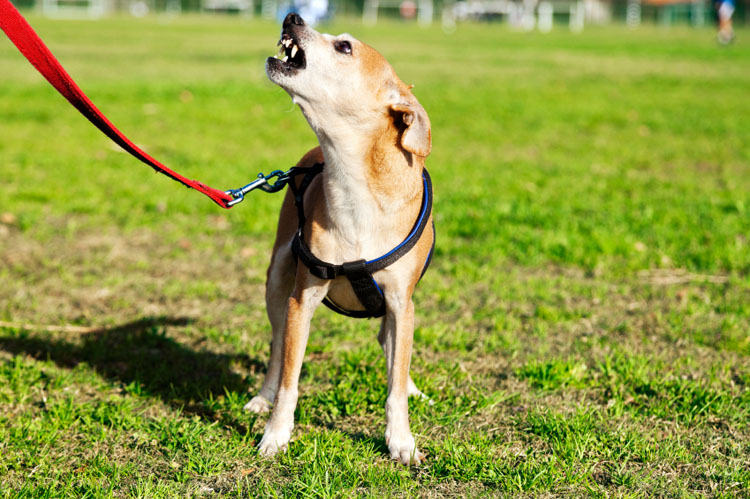
If your dog is fearful or aggressive toward anything, it’s extremely important to understand the object that triggers your dog’s reaction. You need to determine the small triggers that cause your dog to react and pair those dog aggression triggers with good things. Sound tricky? It most certainly can be, so I highly advise finding a professional dog trainer with lots of reactive dog experience.
What are Triggers?
Triggers are anything in your dog’s environment that cause your dog to react. Triggers are usually a sight, sound, smell or a combination of all three. Reacting means your dog reacts negatively toward a trigger; he either freezes, lunges, barks, backs away or starts fooling around (i.e. sniffing the group excessively, biting the leash, etc.).
Examples of triggers for most dogs:
- Jingling of dog ID tags (indicating another dog is close by).
- Barking dog (indicating another dog is close by).
- Sight of a dog from a distance.
- Smell of a dog (this one is hard for us to identify).
- Person running behind or past during walks.
- Fast-moving cars zooming past.
- Approaching person.
- Plastic bag floating through the wind.
- New object (trash can, sign, new furniture) appears.
- Bearded man walking with an umbrella.
Basically, triggers can be anything.
How to Identify Your Dog’s Triggers
If your dog has been reactive for some time, you probably have a pretty good idea what causes him to negatively react. However, it’s important to narrow down the trigger that sends your dog into a barking frenzy.
Many times, pet owners describe their dogs’ trigger as “seeing another dog,” but you need to narrow this down even further. How far away is the other dog before your dog reacts? Some dogs will look at other dogs calmly about 50 feet away, but when the other dogs move closer, the dog starts reacting. In this case, the specific distance between the dog and other dogs is the trigger.
Many times, reactive dogs react to sounds. Reactive dogs will freak out over the sound of jingling ID tags, four feet scampering in the distance or dogs barking. These sounds alert reactive dogs that a dog is nearby, so they better get ready to fight or flee.
Power of Triggers
Once your dog’s triggers have been identified, it’s time to start building positive associations with them. Super yummy treats should be given the moment your dog experiences a trigger, but of course always from a safe distance. If your dog reacts around other dogs or people, never allow your dog to meet them ever.
If your dog alerts or barks at jingling ID tags, then give him a treat as you’re jingling his tags. If it’s the ID tags of other dogs, borrow your neighbor’s dog’s tags. Remember, treats should be given the moment you start jingling ID tags.
For dog barking triggers, give your dog several yummy treats while a dog barks far away in the distance. Start with very far-away barks, then slowly work toward dogs barking down the street, next door and so on.
Get Help
So many pet owners try to manage dog reactivity, including dog aggression, on their own. I know you don’t want to hear this, but I’m being totally honest, you won’t get great results unless you seek professional help. As someone who works with reactive dogs for a living, I still need someone to confirm certain triggers; it’s impossible to narrow them down by myself.
Please find a dog training professional who only uses positive reinforcement methods. Punishment never works with anxiety or aggression; it’ll just make it much worse. If you’re afraid of heights and I scream and slap at you while you’re standing on the roof of a tall building, I don’t think that would help your fear. You would probably snap back at me, so please never use punishment-based methods.
Good luck and set yourself up for success by finding a professional.