Dog Training Nation

In Dogs We Trust

  • Home
  • Training
    • Dogs
    • Puppies
    • Clients
  • Behavior
    • Breeds
  • Health
  • Safety
  • Resources
    • Equipment
    • Books
  • Dog Training Videos
  • About
You are here: Home / Blog

My Dog Growls at Me

July 25, 2014 by Fanna Easter

Dogs Growling

My Dog Growls at Me
Chart of calming signals.

What should you do when your dog growls?

Dogs will growl. This is completely normal behavior. They may growl during play or when encountering something new or scary (like a plastic bag flapping wildly in the wind). Always look at your dog’s body language and environment to determine if your dog is having fun or your dog is growling out of fear.

Dog Growls When Playing

When dogs play, they usually growl. Some puppies may be more vocal than others. If your dog or puppy is playing with another dog and he begins growling, separate your dog from the other dog in a calm manner. Pay close attention to watch the other dog’s body language. If the other dog runs away, then your dog’s growling (or play style) may be too much for that dog. That is a safe time to end the play session.

If the other dog continues to play with your dog, then allow them to continue playing.View the Chart of Calming Signals created by Doggie Drawings to understand your dog’s body language.

A special shout-out to Doggie Drawings by Lili Chin. This site has wonderful educational tools for everyone, including posters for educating children about dog bites.

RELATED: Dog Aggression

When Your Dog Growls, But it’s Not Playtime

Dogs will display signals that say to a dog behaviorist that the dog is uncomfortable in a situation before he growls. Think of it this way: How do you know a thunderstorm is approaching? The wind picks up, dark clouds roll in, you can smell an increase of moisture in the air, and it begins to rain, then you hear lightening strike. Think of growling as lightening strikes. We need to interrupt and acknowledge calming signals before the lightening strikes. In my 20+ years of dog training, I’ve never witnessed a dog growl or bite without warning signs. We must understand a dog’ s body language to be able to prevent dog bites.

Never punish a dog for growling! This is your dog’s warning system. A dog growl means that he is uncomfortable in the current situation. People react the same way when scared. We may say, “Leave me alone,” “Stop” or “You are scaring me” to the person who is causing discomfort. As pet parents, we must respect a dog’s growl.

To learn more about dog body language, visit “Learn to Speak Dog” by Dog Gone Safe and watch videos and free downloads. The “Learn to Speak Dog” series is highly educational and will help you better understand dog behavior and growling signals.
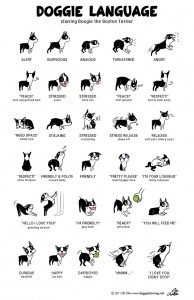
Doggie Language Chart
Calming Signal Chart by DoggieDrawings by Lili Chin

What should I do if my dog growls as a warning?

  • Acknowledge and respect your dog’s calming signals (example: a growl).
  • Scan the environment to locate what caused your dog to growl (flying plastic bag, another dog standing too close in his  face, doorbell ringing, stranger approaching, touching his toenails, meeting new strangers, child is too close and in his face, fill in the blank).
  • Calmly move the dog away from the trigger that caused the growl.
  • Write down important facts about the trigger:

– Happened when…
– Trigger was…
– We were doing…
– Has happened X amount of times…

  • Keep your dog away from these triggers. If he is exposed to his trigger over and over again, he rehearses his stressed behavior, which strengthens it and that means it will take much longer to teach him good behavior around the trigger. Anxiety is caused by repeated exposure to a stressor, and we don’t want your dog to become anxious. Not removing the dog from the situation that brought on a growl reinforces that the growling is the default.

Use desensitization and counter conditioning to overcome the trigger that caused your dog to growl fearfully.


Dictionary.com defines desensitization as:

1. The elimination or reduction of natural or acquired reactivity or sensitivity to an external stimulus, as an allergen.
2. A behavior modification technique, used especially in treating phobias, in which panic or other undesirable emotional response to a given stimulus is reduced or extinguished, especially by repeated exposure to that stimulus.

Both definitions apply to training your dog so he can overcome things that he may have first thought were threatening or scary.


To better illustrate the fear-based growl, here is a brief example:

If your dog is terribly scared of crickets and he growls because of the:

  • Noise they make
  • Unpredictable hops
  • Scent they carry

This is generally a fear-based or warning growl.

The dog growl as the cricket is encroaching in his space is the dog’s trigger warning.

If the dog was taken out of the growl situation, but can still acknowledge that the cricket is in the room you can begin to reward the dog with his favorite treat while he can still see the cricket. Doing this will begin to teach your dog to associate that the cricket isn’t something to fear. Instead, he can begin to learn that a cricket present followed by yummy food and no growling is an acceptable behavior.

Overtime even if the cricket moves closer towards the dog (slowly) while feeding the dog treats. You will see improvement in the dog’s temperament. Your dog will become more comfortable with the cricket in the room.

You will want to feed the dog a treat as he continues looking at the cricket. If, at any time, it comes too close and the dog begins to growl or his body language shows he is getting uncomfortable, it is important to remove the dog from the situation and not treat during the uncomfortable moments. That will only reinforce the wrong feelings or behavior with getting a reward.

  • Never force, pull a dog towards a trigger or repeatedly introduce a dog to a known trigger, which causes them to freak out. This will make your dog way worse, we call this “flooding.”

This does not work. You are teaching a dog to become helpless, which is cruel.

This example is no substitute for a professional behaviorist or dog trainer assessing the behavior problem that causes your dog to growl. There is no one size fits all scenario.

Please consult with a local professional to correct growling behavioral issues.


Locate a qualified animal behaviorist and dog trainer in your area to begin the desensitization process. We recommend having an expert physically involved to offer guidance and to be successful with these behavior modifications. Hiring a professional dog behaviorist and/or a professional dog trainer will quicken positive results.


If you have any concerns, find a qualified dog trainer and animal behaviorist. Most dog trainers will meet you and your dog, assess their behavior and answer your questions. Dog trainers have many resources at their fingers tips, such as qualified animal behaviorists. Qualified animal behaviorists (ABs) are extremely knowledgeable in dealing with complex behaviors. A certified animal behavior trainer or an animal behavioral expert will work with your local vet and dog trainer. I’ve consulted with pet parents and animal behaviorists in several cases to arrive at a point where the dog has overcome his fears and provide the animal’s owner with excellent results.

When does your dog display calming signals? Please share in the comment section below.

READ ALSO: Choosing an Animal Behaviorist
Filed Under: Behavior Tagged With: calming signals, dog aggression, dog aggression to children, dog aggression to other dogs, dog aggression to owner, dog behavior, dog behaviour, dog growls, dog training advice, Dog Training Tips, my dog growls, stop a dog from biting, why dogs growl

Dachshund

July 23, 2014 by Fanna Easter

Dachshund Breed Info

Dachshunds
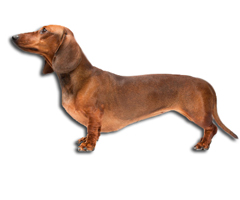
Short-haired Dachshund, the hunter.

Dachshund means “badger dog” in German, as “hund” means dog.

While living in Germany, I witnessed Jagermeisters (hunt masters) marching into the woods with very eager Dachshunds pulling on their leashes. Dachshunds are adorable, but don’t underestimate their hunting abilities. They are serious scent dogs and are built for it! While on the smaller size, Dachshunds are long, low and level, which means they are closer to the ground to pick up scent. They are long and low with narrow width of chest so they can fit in holes to flush game (and prevents them from getting stuck in holes too!). Now, their chest is deep too, as they need the lung capacity to hunt for longer periods of time. Their front feet are wide and powerful so they can dig out vermin or game. Those feet can move dirt at record speeds! Their long tail ensures the hunter can see them over tall brush. There, you go! A wonderful hunter built for their jobs!

These little hunters have a variety of coats, such as wire, smooth or long coats. When living in Germany, the Jagermeisters usually had wire coat versions, as I’m assuming their coats did not catch on briars and brush. I’ve had all three varieties in my group classes and all of them could easily hunt or dig for game and were so charming. 🙂

Exercise for Dachshunds

Remember, this breed was bred for an activity so they need physical and mental stimulation daily. Daily walks and food puzzles are essential. Most Dachshunds like to dig, as they were made for it, so provide them with opportunities to dig, such as a digging pit made from a plastic kid pool filled with sand and treats hidden inside. If you don’t have a backyard, find a larger box with sides about 6 inches tall and fill with newspapers or old towels, and hide treats inside — an inside digging pit!

Grooming Dachshunds

Depending on the coat, their grooming is moderate to minimal. Of course, the smooth (short coat) and wirehair can be easily brushed weekly. The long coat version needs a bit more brushing and I would recommend sectioning their coat and combing through first, then follow with a slicker brush to remove any dead undercoat. Weekly nail trims and ear cleanings are a must, as their nails are tough (made for digging) and ears are longer than most breeds, which traps dirt and moisture. Don’t forget brushing your Dachshunds teeth 3-5 times per week.

Dachshund Training Tips

Dachshunds respond to positive reinforcement and love to earn treats! They are very smart and learn polite manners quickly. I recommend Dachshunds wear body harnesses, as harnesses evenly distribute pressure if your Dachshund pulls during walks. Harnesses will help prevent neck and back injuries. Some pet owners complain of potty training issues, and I chalk it up to: “It’s hard to tell if my Dachshund is pottying or not because they are so low to the ground.” 🙂  It’s hard to tell if he is sitting or urinating, especially for female Dachshunds. Learn more at Potty Training Tips

Special Requirements

Due to their longer backs, Dachshunds are prone to back injuries from jumping on or off furniture, laps or out of a car. I recommend two options to prevent this injury.

  1. Teach your Dachshund to “up,” which means you will pick him up and place him down on the ground. This is easy to teach. Wrap your arm around him and click/treat. Then, pick him up and click/treat. Pick him up and put him down, click/treat. Practice daily.
  2. Ramps: Have ramps for your bed, sofa and vehicle. Place small bits of cheese along the ramp and your Dachshund will follow the trail up and down the ramp.
  3. Keep him slim: Watch his waistline. Use pea-sized training treats and provide plenty of exercise.

Learn more about the Dachshund and rescue at Dachshund Club of America.

Tell me about your Dachshund in the comments below!

More: 
Golden Retrievers 
American Pit Bull Terriers 
Goldendoodles 
German Shepherds

Filed Under: Breeds Tagged With: dachshund, dachshund grooming, dachshund puppies, dachshund rescue, dachshund training

Choosing an Animal Behaviorist

July 23, 2014 by Fanna Easter

Animal Behaviorist

Animal BehavioristDealing with dog aggression, moderate to severe anxiety or fearfulness or obsessive compulsive behaviors (OCD) is extremely trying for pet owners. I’ve held these owners in my arms, as they sobbed. It’s a difficult situation for dogs and their owners.
That is why I refer these cases to a qualified animal behaviorist. Within my 20 years of dog training experience, I find difficult cases are solved much quicker and with better results when a qualified animal behaviorist is involved.

What is an Animal Behaviorist?

An animal behaviorist is an expert who deals with difficult behavior cases, such as dog aggression, anxiety and obsessive compulsion behaviors on a daily basis.

Veterinarians, whom are board certified in animal behavior:

  • Bring their expert veterinary knowledge plus four years of solving and studying dog behavior (and many other animals) to their cases
  • Have completed their vet requirements and studied dog behavior, solving difficult behavioral cases for a minimum of four years, plus have passed a demanding animal behavior board certification
  • Can prescribe medications, if needed, so a dog can learn how to overcome his fears

Applied Animal Behaviorists have:

  • Earned a Masters or PhD degree in animal behavior
  • Studied dog behavior for a minimum of 7 years
  • Been required to successfully solve difficult cases under supervision with field experts during their internships

Prescribed Anti-Anxiety Medications

Some pet owners are reluctant to use anti-anxiety medications and I understand. You’re scared you will make your dog worse or drug him. Personally, when training dogs with life-destroying anxiety, I’ve seen amazing results when anti-anxiety medications are used. “The ultimate goal is to reach a point where the drugs are no longer necessary, a point where your dog has overcome his anxiety and learned to react in an appropriate fashion,” says Dr. Lorie Hudson DVM.

RELATED: Medical Modalities for Dogs

Why Contact an Animal Behaviorist?

Dog trainers and animal behaviorists are two different professions, yet they work together as a fabulous team. Think of dog trainers as general practitioners (GPs) and animal behaviorists as specialists in dog behavior. 

  • Animal behaviorists study and treat difficult cases daily with great success rates. They are required to complete yearly continuing education in their field of study and stay updated on the latest findings with fear, anxiety, aggression or OCD.
  • Animal behaviorists provide immediate assistance and solutions for the issue at hand, which provides quicker results for your dog and saves money. Dog trainers (GPs) teach polite manners, solve everyday pet issues and are usually a pet owner’s first contact when dealing with difficult behaviors. 
  • Dog trainers’ knowledge is vast. They are prepared for anything that might walk through their training center doors, complete yearly continuing education and provide recommendations to ensure the success of a dog and their owners. They are the general practitioners of the dog training world. They triage to specialists when needed. Personally, I’m extremely proud to be a dog trainer and empowered to have qualified animal behaviorists to call upon when needed.

Referral Process and Consultation

  1. When dog trainers encounter moderate to extreme fear, aggression, anxiety or OCD, they refer pet parents to an animal behaviorist, as these cases require one-on-one attention that provides specific training protocols for success. Dog trainers usually have their preferred animal behaviorist and will always ensure this person works for you and your dog too.
  2. An animal behaviorist will ask you to complete an extensive history background. Answer to the best of your knowledge. This history report is key to note triggers (what causes your dog to act fearful, aggressive, anxious or causes OCD behavior to happen).
  3. Then, an animal behaviorist will involve your local veterinarian to rule out any health issues.
  4. Once heath issues have been ruled out, the animal behaviorist will schedule a time to discuss your dog’s history background. Ask questions and observe your dog.
  5. After the consultation, a training protocol is designed and medications are prescribed if needed.
  6. Dog trainers will assist you with your prescribed training protocol and report back to the animal behaviorist on progress.
  7. Most animal behaviorists require a six-month check-in, especially if medications were prescribed.

Contacting an Animal Behaviorist

Usually, local positive reinforcement dog trainers work with an animal behaviorist in the area. However, still research your dog trainer’s referral. Qualified animal behaviorists should be listed in the below database:

  • American College of Veterinary Behaviorists Directory
  • American Veterinary Society of Animal Behavior
  • Animal Behavior Society

If you’re unable to find a qualified person in your area, the below vets (both are board certified in animal behavior) provide phone consultations through your regular vet:

  • Tufts Behavioral College Vet Fax Program
  • Veterinary Behavior with Dr. Martin

Animal Behaviorist Tips

  • Not recommended: Dog trainers or unqualified animal behaviorists boasting they can fix any issue is equivalent to a general practitioner saying they can preform open heart surgery.
  • Choose a qualified animal behaviorist. The cost is the same or less than an unqualified animal behaviorist.
  • Do not choose an animal behaviorist using punishment-based training methods.

You’re more than welcome to ask any questions on this subject in the comment section below. This is a tough situation and I hope this article points you in the right direction with solutions.

READ ALSO: ASPCA – Finding Professional Help

Filed Under: Behavior Tagged With: animal behaviorist, Certified Dog Trainer, dog aggression, dog anxiety, dog behavior, dog bites, dog growls, dog trainer, dog training classes, Dog Training Tips, fearful dog, how to train a puppy, obedience dog trainer, obedience training, puppy aggression, puppy obedience training, scared dog, stop a dog from biting, stop a dog from growling

Choosing the Right Dog Trainer

July 23, 2014 by Fanna Easter

Find a Trainer for Your Dog

Dog Trainer
Happy dog trainer!

How do you pick the right dog trainer for you and your dog?

Dog Trainer Requirements

  1. Use positive reinforcement training. This means he uses treats to reward good behaviors and redirects or ignores bad behaviors. Positive reinforcement works!
  2. Use positive reinforcement on humans too! Basically, dog trainers are teaching you how to train your dog. And if it’s not fun, who wants to do it, right? 🙂
  3. Provide a safe, clean and fun learning environment. Potty accidents must be cleaned immediately. Dogs should not be allowed to bark and growl at each other. Good dog trainers will provide visual barriers to ensure everyone is safe and having fun! If a dog is barking constantly, the dog trainer should be offering the pet parent tips to manage this barking.
  4. Has excellent communication skills. Dog trainers should smile, encourage, ignore mistakes, offer different tips to ensure success. Students should feel comfortable and encouraged.
  5. Understands dogs are individuals. Dogs learn differently, just like humans, so a dog trainer should have plenty of fun ideas in his Dog Trainer Tool Box. He needs to find what works for your dog.
  6. Provides plenty of time to practice behaviors during class. While your dog trainer will explain how to teach a behavior, his stories should be kept to a minimum. About 70% of class time should be focused on practice time.
  7. Shows up on time for each session and is available to answer questions after class.
  8. Helps pet parents meet or exceed their training goals. Dog trainers should check in with each team before, during and after class even if it’s a “thumbs up”or “high five” when they reach their goal 🙂
  9. Leaves you feeling empowered. You must feel successful during and after each class. Fabulous dog trainers strive to ensure you and your dog are always successful.

For additional details, click here.

Locating a Dog Trainer

My advice is to begin searching for dog trainers at Animal Behavior College Certified Dog Trainers, Karen Pryor Academy, Council of Certified Dog Trainers Database, International Associates of Animal Behavior Consultants,  and American Veterinary Society of Animal Behavior Consultants.

Interviewing a Dog Trainer

Now that you understand the requirements and have located a dog trainer, it’s time to interview them. It’s best to speak with dog trainers on the phone and ask to observe a class in session. Dog trainers are honored when pet owners ask to observe a class because they can show off their skills. Using your list of dog trainer requirements, observe a group class in session. Are they meeting your requirements? If, at any time, you are not comfortable observing/practicing any techniques, stop and speak with your trainer. I’m empowering you to be your dog’s voice. 🙂

Tell us about your dog trainer in the comment section below!

More: 
Dog Trainer Fanna Easter 
Dog Trainer Karen Pryor 
Dog Training Classes 
Dog Obedience Training

Filed Under: Dogs, Training Tagged With: animal behaviorist, dog behavior, dog obedience training, dog trainer, dog training, dog training classes, Dog Training Tips, how to train a dog, how to train a puppy, how to train your dog, obedience training, puppy training, puppy training classes

Summer Safety Tips for Dogs

July 17, 2014 by Fanna Easter

How to Keep Your Dog Cool

Summer Safey Tips
Eillen_1981/Deposit Photos

Summer is here, and it’s hot down here in the South. 🙂 It’s critical to be prepared so your pooch is nice and cool even in the shade!

Before we get started, I should mention dogs pant to cool themselves and can sometimes become overheated–this can happen in minutes! Lastly, keep your dog in the shade. If shade is not available, create your own shade using a pop-up tent.

Dog Supplies

I’ve tried so many dog cooling products and many have ended up in the trash. Here are my favorites!

Plastic Kiddie Pool

Sobek loves his pool! After early morning walks (in Tennessee, it’s still 85 degrees), he glides right in the cool water. He’ll lie on his side and smile. I recommend the 60-inch plastic pool for larger dogs or if several dogs will share the pool. You can purchase one at large retail stores, such as Target or Wal-Mart. Plastic pools are stored in random areas so ask a sales associate.

Cool Coat

It’s embarrassing how many I’ve tried even human versions. My favorite is Kool Koat. It works! After following directions to wet the coat, I store their coats in our ice cooler until needed. Depending on heat exposure, I may bring two Kool Koats and store the second one in our ice cooler and switch out as needed. While wearing a Kool Koat,  monitor your dog to ensure he is not overheating. Check out Overheating Signs and Treatment by Dr. Becker for overheating signs and quick treatment. Don’t forget to check, by feeling, your dog’s Kool Koat to make sure it’ s not warm. If warm, re-wet in cool water or switch to a second wet Kool Koat. Store your first one in your ice cooler and switch out as needed.

Crate Cooling Pad

Oh, these have been my obsession. I was determined to find the perfect version! This cooling crate pad works best. I bought it 10 years ago at a dog event and I’ve not found anything that works better. And it’s cheap and stays cool for days! It’s super simple to use. Fill a sink with cold water, submerge the Cooling Crate Pad, allow it to sit until the non-toxic crystals plumb up, wring out excess water and voila! One drawback is some dogs don’t like walking on it, as it feels like walking on soft mud. A trick is to place in the back of his crate or under a towel. My past Bouviers would wad it up and keep it on their tummies. Sobek will walk, sleep, snore and stand on his cooling pad. 🙂

Cold Water

Bring plenty of cool water for your dog. Bring a bowl and provide unlimited access to cool water at all times. Keep a jug of water in your cooler to refresh your dog’s water bowl as needed.

Frozen Treats

Fill Kongs with peanut butter, cream cheese, honey or applesauce, freeze overnight and toss 3-4 Kongs in the ice cooler. Provide as tasty and cool treats as needed.

This goes without saying, but I will say it anyway. During the warm or hot weather, never leave a dog a vehicle or in the back of a truck (even in a crate), walk your dog on hot asphalt (will cause paw burns), never leave your dog outside (bring them indoors), or trust a fan to keep your dog cool (pushing hot air around will not cool a dog).

Share your tips on keeping your pooch cool during the summer in the comment section below!

You may also like: Road Trips With Your Dog: What to Pack?

Filed Under: Equipment, Resources, Safety Tagged With: best cooling crate pads, best cooling dog product, cool dog recommendation, heat exhaustion with dogs, keeping a dog cool, summer dog safety, summer dog safety tips, summer safety, summer safety tips

  • « Previous Page
  • 1
  • …
  • 128
  • 129
  • 130
  • 131
  • 132
  • …
  • 135
  • Next Page »

About

Dog Training Nation is a community of dog trainers, dog owners and dog lovers. Our mission is to provide trainers and owners valuable information to enrich dogs' lives. We cover a range of topics, from socializing puppies to dealing with aggressive dog behavior to selecting the best dog products. It is our hope you share our content to make the dog and owner world a better place.

​

Facebook

Video

Dog Training Nation is a dog training blog for pet owners and dog lovers. We cover a range of topics from puppy socialization tips to dog aggression to dog health. It is our hope you share our content to make the world a better place for dogs.

Dog Training Nation

Quick Links

Dog Training
Dog Behavior
Dog Training Videos
Become a Dog Trainer
About
Contact Us

Copyright © 2026 · Lifestyle Pro Theme on Genesis Framework · WordPress · Log in