Dachshund Breed Info
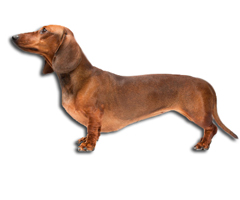
Dachshund means “badger dog” in German, as “hund” means dog.
While living in Germany, I witnessed Jagermeisters (hunt masters) marching into the woods with very eager Dachshunds pulling on their leashes. Dachshunds are adorable, but don’t underestimate their hunting abilities. They are serious scent dogs and are built for it! While on the smaller size, Dachshunds are long, low and level, which means they are closer to the ground to pick up scent. They are long and low with narrow width of chest so they can fit in holes to flush game (and prevents them from getting stuck in holes too!). Now, their chest is deep too, as they need the lung capacity to hunt for longer periods of time. Their front feet are wide and powerful so they can dig out vermin or game. Those feet can move dirt at record speeds! Their long tail ensures the hunter can see them over tall brush. There, you go! A wonderful hunter built for their jobs!
These little hunters have a variety of coats, such as wire, smooth or long coats. When living in Germany, the Jagermeisters usually had wire coat versions, as I’m assuming their coats did not catch on briars and brush. I’ve had all three varieties in my group classes and all of them could easily hunt or dig for game and were so charming. 🙂
Exercise for Dachshunds
Remember, this breed was bred for an activity so they need physical and mental stimulation daily. Daily walks and food puzzles are essential. Most Dachshunds like to dig, as they were made for it, so provide them with opportunities to dig, such as a digging pit made from a plastic kid pool filled with sand and treats hidden inside. If you don’t have a backyard, find a larger box with sides about 6 inches tall and fill with newspapers or old towels, and hide treats inside — an inside digging pit!
Grooming Dachshunds
Depending on the coat, their grooming is moderate to minimal. Of course, the smooth (short coat) and wirehair can be easily brushed weekly. The long coat version needs a bit more brushing and I would recommend sectioning their coat and combing through first, then follow with a slicker brush to remove any dead undercoat. Weekly nail trims and ear cleanings are a must, as their nails are tough (made for digging) and ears are longer than most breeds, which traps dirt and moisture. Don’t forget brushing your Dachshunds teeth 3-5 times per week.
Dachshund Training Tips
Dachshunds respond to positive reinforcement and love to earn treats! They are very smart and learn polite manners quickly. I recommend Dachshunds wear body harnesses, as harnesses evenly distribute pressure if your Dachshund pulls during walks. Harnesses will help prevent neck and back injuries. Some pet owners complain of potty training issues, and I chalk it up to: “It’s hard to tell if my Dachshund is pottying or not because they are so low to the ground.” 🙂 It’s hard to tell if he is sitting or urinating, especially for female Dachshunds. Learn more at Potty Training Tips
Special Requirements
Due to their longer backs, Dachshunds are prone to back injuries from jumping on or off furniture, laps or out of a car. I recommend two options to prevent this injury.
- Teach your Dachshund to “up,” which means you will pick him up and place him down on the ground. This is easy to teach. Wrap your arm around him and click/treat. Then, pick him up and click/treat. Pick him up and put him down, click/treat. Practice daily.
- Ramps: Have ramps for your bed, sofa and vehicle. Place small bits of cheese along the ramp and your Dachshund will follow the trail up and down the ramp.
- Keep him slim: Watch his waistline. Use pea-sized training treats and provide plenty of exercise.
Learn more about the Dachshund and rescue at Dachshund Club of America.
Tell me about your Dachshund in the comments below!
More:
Golden Retrievers
American Pit Bull Terriers
Goldendoodles
German Shepherds
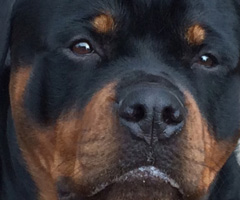
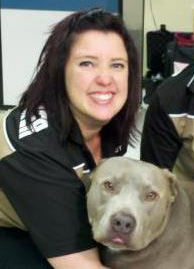 Many times, I’m asked if specific breeds like Pit Bulls are more difficult to train. When teaching dogs polite behaviors, about 90% is the same learning principles, which means all dogs are able to learn. So let’s discuss the differences between Pit Bull Terriers and other breeds of dogs.