No, Dogs Don’t Like Hugs

There’s a pretty good chance you’ve read the latest research showing dogs don’t like to be hugged. This message is spreading like wildfire. It was covered on our local news last night and it’s been trending for several days on social media. Personally, I’m pretty excited this message is finally getting out there because it’s actually true! Dogs don’t like to be hugged.
While there is a very small percentage of dogs that enjoy hugs from their pet owners, the majority of dogs find hugging simply rude. Humans love physical contact; it’s in our DNA and it’s pretty hard not to hug someone you love. Instead of hugging your dog, try these physical contact behaviors instead.
Hugging Dogs May Upset Them
You’re probably thinking this research about hugging dogs is exaggerated since your dog loves hugs and close contact. However, I would challenge that. As a professional dog trainer, I hear: “My dog’s bite (growl) came out of nowhere” or “My dog has no reason to become aggressive; he just turned on me” every day. Honestly, I can tell you these statements are not true. Dogs are always telling us how they feel. We just don’t listen to them and assume dogs are little furry humans. If we don’t listen and continue to push, dogs will resort to growls, nips or bites, if they can’t get away.
If your dog’s body language is happy and he seems to enjoy hugs, then hug away. But don’t expect your dog to enjoy hugs from visitors; it’s different. If you’re not sure, ask a professional dog trainer for his or her opinion. Don’t rely on a friend’s or dog savvy person’s opinion. The person you ask for advice should be an expert (meaning he or she has earned dog training credentials) at reading dog body language.
How to Embrace Your Dog Without Hugs
Pet Your Dog’s Chest
People love to pet dogs. I’ve noticed a huge increase of pet owners petting their dogs when they’re happy, nervous or stressed. Petting your dog is fine; just do it politely. Trying petting your dog on the chest or under her neck instead of on top of her head or back. Head pats are just rude behavior from a dog’s perspective. Yes, some dogs learn to deal with it, but it’s still rude. Think about it from your dog’s perspective: would you enjoy someone patting you on the head whenever he meets you? And when you backed away, this person continued to follow you with an outreached hand trying to pat your head. Creepy, I know, and dogs feel this way too.
When petting a dog, allow your dog to walk up to you first. Slowly pet or scratch your dog’s chest while refraining from making eye contact. Some dogs enjoy scratching under their necks (under their jaw), so slowly move up. While petting your dog’s neck, refrain from bending toward your dog. This keeps your face out of her personal space. If your dog moves away, don’t take it personal and stop scratching her.
RELATED: Get Your Dog to Take Treats Gently
Scratch Your Dog’s Back
Dogs love to have the top of their rumps scratched, and will easily swing around for it. There’s nothing wrong with it. Plus, you’re politely keeping your body out of your dog’s personal space. If your dog is comfortable, scratch or rub from your dog’s rump to his rib cage, moving alongside his spine. If your dog moves away, stop scratching and don’t take it personal. 🙂
Let Your Dog Initiate Cuddling
You’re probably looking at your gregarious greeter and thinking, “My dog loves to cuddle and hug.” Well, I live with two super friendly dogs that love cuddling and neck nuzzles too, but, if I initiate cuddling or hugs, it creeps them both out.
When dogs are “creeped out,” you’ll notice their bodies stiffening, ears laying flat against their heads, eyes widening, mouths clamping shut and tails dropping to the ground. Your dog will lean his body away from you and perhaps even growl. It this happens, slowly move away when your dog backs away, and remember not to do it again.
Connect Through Training
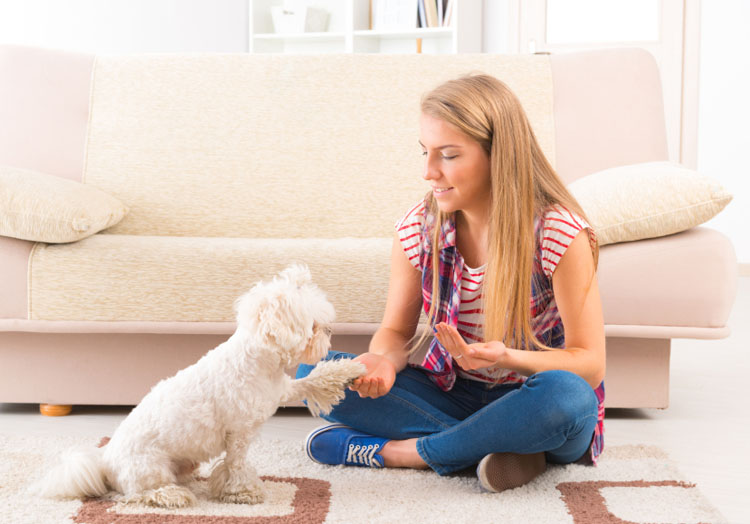
Grab some super high value treats, a clicker and your dog, and teach her a new trick. It can be a silly or functional trick–it doesn’t matter; just have fun. What matters most is that you and your dog are bonding through training, and your dog is learning you can both speak the same language.
Dogs are different than people, so respect their space etiquette and ensure children and families do too.