Meet the Great Dane

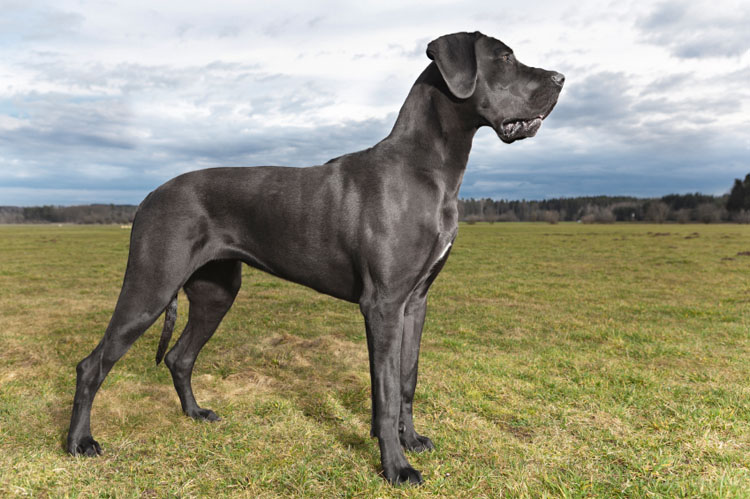
The Great Dane is elegantly compiled of great size and power. So much so, they are known as the “Apollo” of dogs. Great Danes descend from Mastiffs like most breeds of dogs, which is not surprising due to their large size and short coat. They were bred for boar hunting in Germany and are known as “Deutsche Dogge” in their native country, which loosely translates to “german mastiff.” Great Danes are a member of the Working Group through the American Kennel Club (AKC). Instead of hunting, the Great Dane’s function is mainly serving as a companion.
General Characteristics and Temperament
This powerful dog usually stands at least 30” tall. Males typically stand at 32” or more while females stand at least 30” or more. Males weigh in at 130-180 lbs and females at about 110-150 lbs. They’re by no means a small dog.
Great Danes range within three color families: fawn and brindle; harlequin and mantle; and black and blue. An interesting tidbit of information: each color family tends to have different characteristics and even specific health issues.
Great Danes tend to be spunky, confident, friendly and easily trained dogs that are generally good with children and other pets in your home. However, with any giant dog, they should be supervised. Their size and spunkiness can be a bit overwhelming to children and smaller animals. In addition, their long wagging tail can clear a coffee table within minutes. Training will greatly benefit Great Danes and allow them to be well-mannered family companions.
Health and Dietary Needs
As with any giant breed, their lifespan is a bit short, so expect seven to 10 years of enjoyment. In terms of health problems, your major concerns will be: gastric torsion (stomach flips over), cardiomyopathy (heart disease) and osteosarcoma (bone cancer) while your minor concerns being hip dysplasia, CVI (Wobbler’s syndrome), obsessive compulsive disorder (OCD), HOD (skeletal disorder) and hypothyroidism.
Choosing a reputable breeder can drastically reduce heath issues. Parents and grandparents that have been health tested before breeding can reduce the chances of passing on their crippling diseases to your dog. If adopting, ask your veterinarian to complete health testing as well to rule out any lurking health issues.
Diet
Most likely, your Great Dane will thrive on dog foods blended for large breed dogs, meaning higher protein levels and reduced minerals to ensure they grow slowly, which is a good thing. Some Great Danes do very well eating balanced raw diets, but be prepared to order meat in large quantities. With Great Danes being so tall, it’s recommended you provide them with an elevated eating and drinking station to prevent bloat.
Dog Grooming Needs
Great Danes have a short, thick and sleek coat that requires weekly brushing with a rubber curry comb. While their coat is short, they still shed. Never use a deshedding tool, as it can cause brush burn (blisters and bleeding skin) in unskilled hands. To keep dander to a minimum, weekly or bi-weekly baths with a gentle shampoo is important. Remember to rinse completely.
Ears
Great Danes have medium-sized ears that are naturally floppy, but usually cropped (personal preference). Either way, checking their ears regularly for buildup is a good idea. Most of the time, a quick wipe down with an ear cloth will do just fine.
Nails
Oh, they have strong and thick nails, so keeping your Great Dane’s nails trimmed weekly is important. Using clippers or a nail grinder will prevent overgrowth and splitting, which is very painful.
RELATED: Dog Nail Trimming Tips: Teaching Nail Drags Across the Board
Exercise and Dog Training Needs
You may think that this large dog needs a lot of exercise, but this is not exactly the case with Great Danes. They tend to have pretty low energy, so regular walks or even a daily game of fetch will suffice. Although, they do need enough room to move around and stretch those long legs. If you don’t have a yard for them to play in, I suggest taking them to a park or a safe fenced area.
The good news is Great Danes are easily trainable and learn fastest when using positive reinforcement. Due to their size, they can easily pull you around during walks or vet visits, so I would recommend a head halter. Personally, I’ve had great success with reward based training and the right tools, such as the head collar with the Great Danes I have trained.
Conclusion
If you are considering bringing a Great Dane into your family, I invite you to locate a reputable breeder or rescue organization from the Great Dane of America Club.